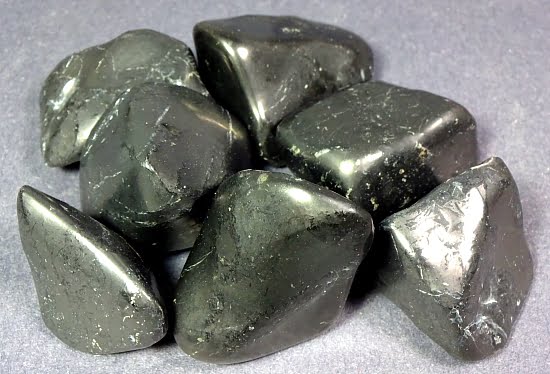
What is Shungite? Does it have healing properties?
Healing crystals have been increasingly popular in recent years. These stones are thought to have many qualities that can improve your health, mind, and soul.
Healing crystals can be used to complement and alternate medicine. Complementary medicine refers to a combination of standard treatments and alternative medicine.
Although there are many healing crystals available, some are truly unique. Shungite is one such rare stone. It’s believed to be able to protect you from harmful germs and pollutants. It may also help protect you from electromagnetic fields.
Let’s have a closer look at the uses of shungite. We will also discuss the science behind this stone and how it has been used in the past.
What’s shungite?
Shungite, a rare black rock of 99.9% carbon, is very rare. It is most commonly found in Shunga in Russia, Karelia.
It has an unusual composition. Fullerenes are 3-D spherical molecules composed of 60 carbon atoms. These molecules are sometimes called “buckyballs” or hollow.
Shungite, along with the fullerenes and other minerals, is almost all of the minerals on this periodic table.
It is not known where shungite came from. Materials made from carbon are typically made from organic materials that have been decomposed, such as old forests. The stone is believed to be more than 2 billion years old. This was before there was any organic life on the planet.
Some theories about the origins of shungite include:
- A large meteorite fell into Earth, releasing shungite.
- Shungite is formed by microorganisms in the water nearby.
- The composition of organic matter within sedimentary rocks has changed over time.
Scientists aren’t sure how or where shungite formed, but they believe that the stone’s potential advantages can be attributed to its fullerene content.
Are there any benefits?
There is little evidence to support the claims of shungite’s benefits. Many are either anecdotal or require more rigorous research. Below are the benefits of shungite.
It kills viruses and bacteria.
Fullerenes are a type of carbon nanostructure (CNS) found in shungite. CNSs can be described as different forms of carbon.
A 2017 review of studies shows that CNSs can eliminate harmful pathogens. CNSs are believed to damage the cell walls of viruses and bacteria. CNSs can also interact with microbes to lose electrons and cause them to die.
It is not clear what this means for human diseases. More research is needed to understand how fullerenes in shungite may affect pathogens.
Purifies water
Shungite has been used since ancient times to purify water. It is believed to be anti-bacterial and a virus.
A 2018 study stated that shungite could remove organic substances and contaminants from water. A 2017 study found that carbon from Shungite can remove radioactive substances from water.
Reduces oxidative Stress
A 2017 animal study shows that shungite exhibits antioxidant properties.
For 2 days, researchers exposed mice to UV B radiation. The mice suffered skin damage and oxidative Stress. Oxidative Stress is caused either by reactive oxygen species or molecules that cause damage to healthy cells.
After 7 days, researchers applied a shungite solution on the mice’s skin. This reduced ROS production and increased the activity of antioxidant enzymes.
Although these results might seem promising, it is important to remember that they were only performed on mice. Further research is required to determine shungite’s antioxidant potential for humans.
Inflammation is reduced
The 2017 animal study showed that shungite reduced inflammation. Researchers measured lower levels of inflammation markers such as cytokines or proteins involved in inflammation.
Scientists speculated that shungite might be beneficial in treating inflammatory diseases because of this benefit. More research is needed.